

The Growing Need for Multi-Cloud Cost Optimization Solutions
The modern enterprise landscape is increasingly defined by multi-cloud adoption. Organizations often leverage different cloud providers like AWS, Azure, and Google Cloud Platform to meet diverse technical requirements, avoid vendor lock-in, and enhance resilience. While offering immense flexibility and innovation potential, this distributed environment also introduces significant complexities, particularly concerning expenditure.
Managing resources and understanding spending across multiple, disparate cloud platforms becomes a formidable challenge. Without a unified approach, costs can quickly spiral out of control due to redundant resources, inefficient usage, and a lack of consistent visibility. This is precisely where multi-cloud cost optimization solutions become not just beneficial, but absolutely essential for sustainable growth.
Understanding Multi-Cloud Cost Optimization Solutions
Multi-cloud cost optimization solutions refer to the strategies, processes, and tools designed to minimize expenditures across an organization's various cloud environments. Their primary goal is to ensure that cloud resources are utilized efficiently, aligned with business needs, and managed financially in a cohesive manner. This approach moves beyond simply cutting costs, aiming instead for maximum value and efficiency from every cloud dollar spent.
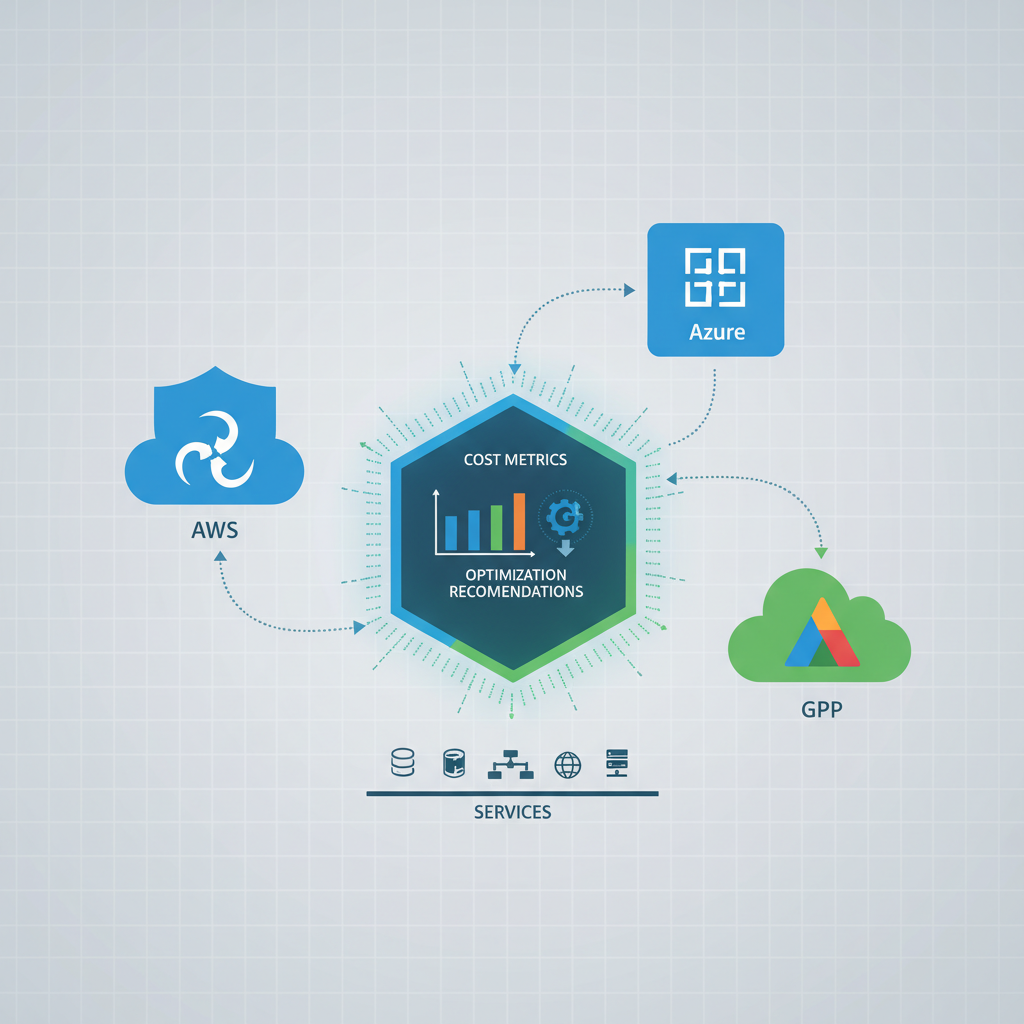
These solutions provide a holistic view of an organization's cloud infrastructure and associated costs. They enable businesses to gain crucial cross-cloud cost visibility, identifying waste, optimizing resource allocation, and forecasting future spend. The underlying principle is to transform opaque multi-cloud billing into transparent, actionable insights.
Key Components of Effective Multi-Cloud Cost Optimization
Effective multi-cloud cost optimization relies on several interconnected components that work in tandem to drive efficiency. These elements address different facets of cloud resource management and financial governance. Implementing these components systematically ensures a comprehensive strategy.
Cost monitoring and analysis are foundational, providing real-time data on consumption and spending patterns across all providers. This visibility is crucial for identifying anomalies and areas of inefficiency. Resource right-sizing and utilization ensure that virtual machines, storage, and other services are perfectly matched to their workload requirements, preventing over-provisioning. Automation and policy enforcement play a vital role in consistently applying optimization rules, such as scheduling non-production environments to shut down during off-hours. Furthermore, organizations often seek vendor-agnostic cost solutions to ensure impartiality and comprehensive coverage across their diverse cloud ecosystem.
Strategies for Achieving Multi-Cloud Cost Efficiency
Achieving multi-cloud cost efficiency requires a combination of strategic planning and tactical execution. Organizations must develop a robust framework that spans across all their cloud deployments. This framework integrates financial accountability with technical operations, fostering a culture of cost-consciousness.
A key strategy involves the adoption of multi-cloud FinOps principles. This operational framework combines finance, technology, and business teams to collaboratively manage cloud spending. It shifts responsibility from a single department to a shared effort, ensuring that financial decisions are driven by real-time data and technical understanding.
Practical Optimization Techniques
Several practical techniques can be employed to significantly reduce multi-cloud expenditures. These methods often involve analyzing usage patterns and leveraging specific cloud provider offerings. Implementing these techniques systematically can yield substantial savings.
Leveraging reserved instances and savings plans from cloud providers offers considerable discounts for committing to a certain level of usage over time. Identifying and eliminating idle resources, such as unattached storage volumes or forgotten virtual machines, is another quick win for cost reduction. Optimizing data transfer costs, often a hidden expense, involves strategically placing data and utilizing efficient networking options. Finally, implementing autoscaling and serverless architectures ensures that resources scale up or down dynamically with demand, eliminating waste during periods of low activity.
MAXIMIZE CLOUD SAVINGS
Connect With Opsio
Tell us about your business requirement and let Opsio take care of the rest.
✓ No commitment required
✓ Trusted by experts
The Role of Technology: Tools and Platforms
Technology plays an indispensable role in enabling effective multi-cloud cost optimization solutions. Manual tracking and analysis across disparate cloud bills are simply not feasible for most organizations. Specialized tools and platforms automate the complex tasks of data aggregation, analysis, and recommendation generation.
These solutions provide the necessary infrastructure for unified cloud financial management, offering a single pane of glass for all cloud spend. They help organizations transcend the silos of individual cloud provider consoles, delivering comprehensive insights. Moreover, cloud management platforms (CMP) often include robust cost optimization modules designed to centralize control and reporting.
Essential Features of a Robust Solution
A robust multi-cloud cost optimization solution comes equipped with a suite of features designed to empower financial and technical teams. These features enable proactive cost management and provide actionable intelligence. Selecting a solution with these capabilities is paramount for success.
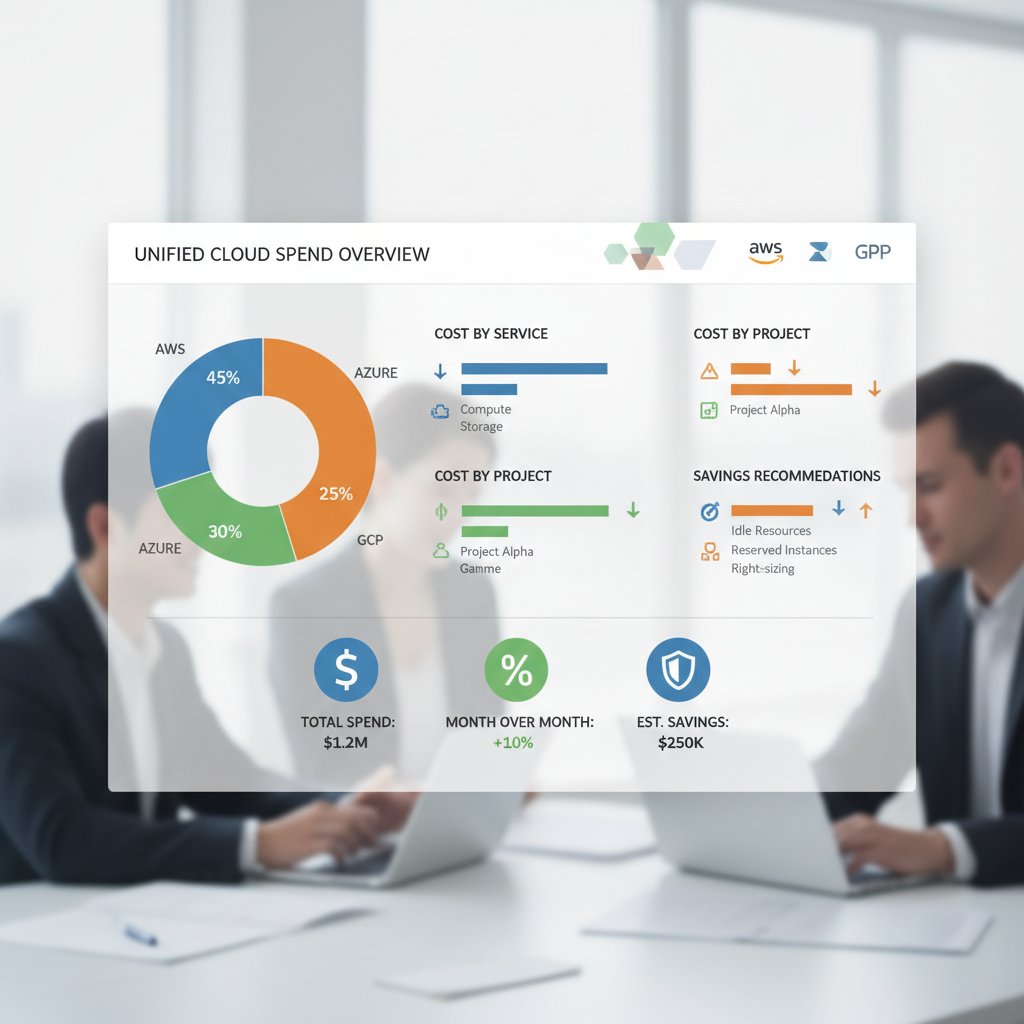
Real-time reporting and dashboards are crucial for instantaneous insight into spending trends and resource utilization across various cloud providers. Anomaly detection and alerts help identify sudden spikes in spending or unusual resource consumption, allowing for prompt investigation. Recommendation engines analyze usage data and suggest specific optimization actions, such as right-sizing instances or purchasing savings plans. Strong integration capabilities with all major cloud providers are essential for true inter-cloud resource optimization, ensuring that no part of the infrastructure is overlooked.
Benefits of Implementing Multi-Cloud Cost Optimization Solutions
The advantages of implementing robust multi-cloud cost optimization solutions extend far beyond mere financial savings. While reducing expenditure is a primary driver, these solutions also deliver significant operational and strategic benefits that contribute to overall business health and agility. They fundamentally transform how organizations manage their cloud presence.
Financially, businesses experience a notable improvement in return on investment (ROI) for their cloud expenditures. Operational efficiency is enhanced through streamlined processes, automated resource management, and a reduction in manual oversight. Strategically, better decision-making is fostered by granular insights into spending, enabling organizations to allocate budgets more effectively and gain a competitive advantage through optimized resource utilization.
Beyond Cost Savings: Enhanced Control and Governance
While cost reduction is a tangible benefit, multi-cloud cost optimization solutions also bring about enhanced control and governance, which are equally vital. These aspects contribute to a more secure, compliant, and well-managed cloud environment. They ensure that cloud resources align with corporate policies.
Improved compliance is a significant benefit, as centralized visibility and policy enforcement help organizations meet regulatory requirements across all cloud platforms. Better resource allocation ensures that investments are directed towards high-value initiatives, preventing resources from being tied up in underutilized services. Furthermore, greater transparency provides a clear understanding of expenditures, which is critical for effective hybrid cloud cost control and fostering accountability across teams.
Challenges in Multi-Cloud Cost Optimization
Despite the clear benefits, organizations often face several challenges when attempting to optimize costs across multiple cloud environments. These hurdles can complicate implementation and hinder the effectiveness of optimization efforts. Addressing these challenges proactively is key to successful outcomes.
One major challenge is the inherent complexity of managing diverse pricing models, service catalogs, and billing structures from different cloud providers. This complexity often leads to data silos, where cost information is fragmented and difficult to consolidate. Another significant hurdle is the lack of specialized expertise within teams, as effective optimization requires a deep understanding of both financial principles and specific cloud technologies. Furthermore, concerns about vendor lock-in can sometimes deter organizations from adopting vendor-agnostic cost solutions, even though these are designed to provide flexibility.
Overcoming Obstacles
Overcoming these obstacles requires a combination of strategic shifts, technological investments, and cultural changes. A proactive and integrated approach is essential for navigating the complexities of multi-cloud cost management. This involves empowering teams and providing them with the right resources.
Establishing a dedicated FinOps culture is paramount, fostering collaboration between finance, operations, and development teams to make data-driven decisions about cloud spending. Investing in the right tools and training equips teams with the necessary capabilities to analyze costs effectively and implement optimizations. Standardizing processes across clouds, wherever possible, helps to reduce complexity and improve consistency in resource provisioning and management. This standardization also makes multi-cloud spend management more straightforward.
Implementing a Multi-Cloud Cost Optimization Strategy
Implementing an effective multi-cloud cost optimization strategy is a structured process that involves several distinct phases. This step-by-step approach ensures a comprehensive and sustainable effort to manage cloud expenditures. Organizations should view this as an ongoing journey rather than a one-time project.
The initial phase focuses on gaining a deep understanding of current spending, followed by identifying specific areas for improvement. Subsequent steps involve implementing changes and then continuously monitoring their impact. This iterative cycle helps to embed multi-cloud spend management into the organization's operational DNA, ensuring long-term efficiency.
Step 1: Gain Comprehensive Visibility
The first crucial step is to achieve complete transparency regarding your multi-cloud environment. This foundational visibility is indispensable for any subsequent optimization efforts. Without a clear picture, efforts will be haphazard and ineffective.
Aggregate all billing and usage data from every cloud provider into a centralized platform. This allows for a unified view of your entire cloud footprint. Next, establish baseline costs and usage patterns to understand typical expenditures and identify significant deviations.
Step 2: Analyze and Identify Optimization Opportunities
Once comprehensive visibility is established, the next step involves a deep dive into the collected data. This analytical phase is where potential savings are uncovered. Thorough analysis reveals where resources are being underutilized or mismanaged.
Pinpoint underutilized resources, such as virtual machines running at low CPU percentages or storage volumes with minimal activity. Discover idle assets and misconfigurations that may be incurring costs without providing business value, like old snapshots or unattached IPs.
Step 3: Implement Optimization Actions
With identified opportunities in hand, the next phase is to take concrete actions to realize those savings. This step requires careful planning and execution, often involving collaboration between different teams. Automation can significantly streamline this process.
Right-size instances to match actual workload requirements, preventing over-provisioning and reducing compute costs. Automate shutdown schedules for non-production environments during off-hours to save on compute and related service charges. Explore and negotiate pricing models, such as committing to reserved instances or leveraging spot instances for fault-tolerant workloads.
Step 4: Monitor and Iterate Continuously
Cost optimization is not a one-time project but an ongoing process that requires continuous attention. Cloud environments are dynamic, and so too must be the optimization strategy. Regular monitoring ensures sustained efficiency.
Establish key performance indicators (KPIs) for cost efficiency, such as cost per customer or cost per transaction, to track progress. Regularly review performance against these KPIs and adjust strategies as cloud usage patterns evolve or new optimization opportunities emerge. This iterative approach ensures that your multi-cloud cost optimization solutions remain effective over time.
Frequently Asked Questions
What are multi-cloud cost optimization solutions?
Multi-cloud cost optimization solutions are strategies, processes, and tools designed to minimize expenditures and maximize value across an organization's various cloud platforms. They aim to provide a unified view of spending, identify waste, and recommend actions to improve efficiency across providers like AWS, Azure, and GCP.
Why is multi-cloud cost optimization important?
It is crucial because multi-cloud environments can lead to fragmented spending, redundant resources, and a lack of transparency, causing costs to escalate. Optimization ensures efficient resource utilization, improves financial predictability, and enhances overall operational agility. It helps organizations gain cross-cloud cost visibility and control.
What are the main challenges in optimizing multi-cloud costs?
Key challenges include the complexity of managing diverse billing models, a lack of unified visibility across different cloud providers, and the scarcity of internal expertise. Data silos and varying service catalogs also contribute to the difficulty in achieving comprehensive multi-cloud spend management.
How do multi-cloud FinOps principles apply?
Multi-cloud FinOps principles apply by fostering collaboration between finance, operations, and development teams. It treats cloud spending as a shared responsibility, emphasizing real-time data analysis, budgeting, and forecasting to make informed decisions that drive financial accountability and efficiency across all cloud platforms.
Can multi-cloud cost optimization solutions work for hybrid environments?
Yes, multi-cloud cost optimization solutions are highly effective for hybrid environments. They extend their capabilities to include on-premises infrastructure alongside public clouds, offering a unified approach to hybrid cloud cost control. This allows organizations to optimize costs across their entire IT estate, leveraging both public and private resources efficiently.
What kind of tools are available for multi-cloud spend management?
A variety of tools support multi-cloud spend management, ranging from native cloud provider tools to third-party cloud management platforms (CMPs) and specialized FinOps platforms. These tools often offer features like cost reporting, anomaly detection, resource right-sizing recommendations, and budget alerts, providing vendor-agnostic cost solutions.
MAXIMIZE CLOUD SAVINGS
Connect With Opsio
Tell us about your business requirement and let Opsio take care of the rest.
✓ No commitment required
✓ Trusted by experts
Conclusion
Navigating the complexities of multi-cloud environments while maintaining cost efficiency is a significant challenge for modern enterprises. However, by embracing comprehensive multi-cloud cost optimization solutions, organizations can transform potential financial burdens into strategic advantages. These solutions provide the necessary frameworks, tools, and methodologies to achieve unparalleled cross-cloud cost visibility and control.
Implementing a robust strategy not only leads to substantial cost savings but also fosters greater operational efficiency, improved governance, and enhanced financial predictability. By adopting a proactive and continuous approach to multi-cloud FinOps and leveraging powerful vendor-agnostic cost solutions, businesses can ensure their cloud investments deliver maximum value. The journey to optimized multi-cloud spending is an ongoing one, promising sustained benefits and empowering organizations to thrive in the dynamic digital landscape.
Opsio provides cloud consulting and managed services to help organizations implement and manage their technology infrastructure effectively.